● Client’s Initial Expectations
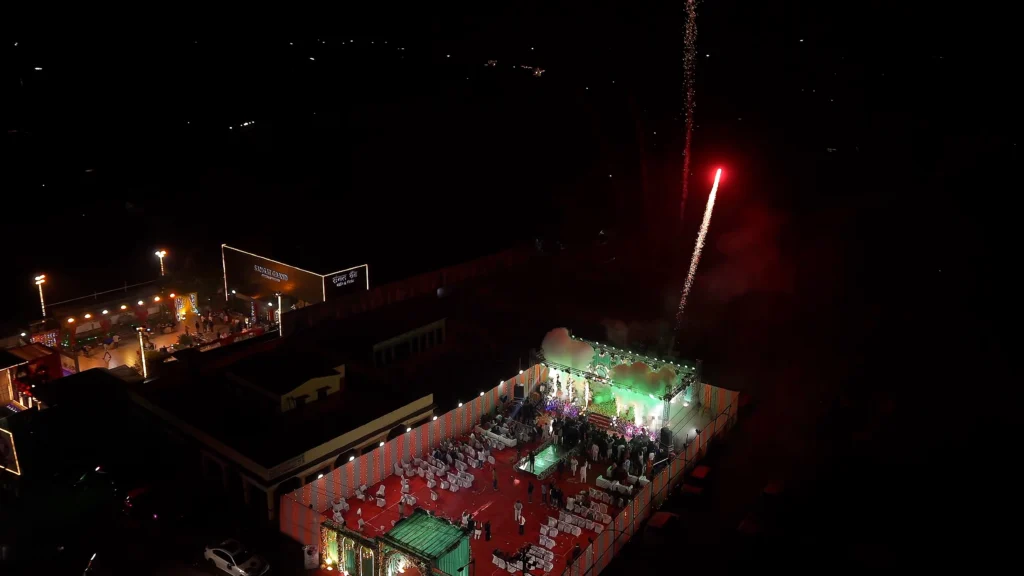
During the event coverage discussion, the client’s main focus was that the final photos and videos should not look like normal recordings but should reflect the complete feel and experience of the event. Their expectation was that important moments should be captured properly and that the final output should look more engaging.
The client specifically wanted an overall view of the venue and crowd, not just close-up shots.
The client wanted entry moments, stage activities, and important moments to be captured from different angles.
The final video was expected to better showcase the scale and atmosphere of the event.
Decorations and event setup needed to be captured in a way that improved the overall presentation.
During the discussion, it was also clear that the expectation was not simply to use a drone but to achieve a better final output. The coverage planning was done keeping these requirements in mind.
Understanding the Venue and Coverage Requirements
Before starting the coverage, the main focus was on understanding the venue and the actual requirements. Every event location is different, so the same planning does not work everywhere. At this stage, the purpose was not simply to use a drone but to understand where and how the coverage would be most useful.
During the planning process, several basic factors were considered.
The venue layout was analyzed to understand whether the area was open and suitable for coverage.
Entry points, stage areas, and main activity zones were identified.
Relevant moments for aerial coverage were determined.
Event timing was considered because lighting conditions can affect coverage quality.
Trees, electric wires, buildings, and other obstacles that could affect drone movement were checked.
A coordination plan was created between the ground team and drone coverage to avoid unnecessary repeated shots.
The main goal of this planning process was to ensure that drone coverage would not feel like just an add-on but would add real value to the final output.
● How Coverage Planning and Drone Shot Strategy Were Decided
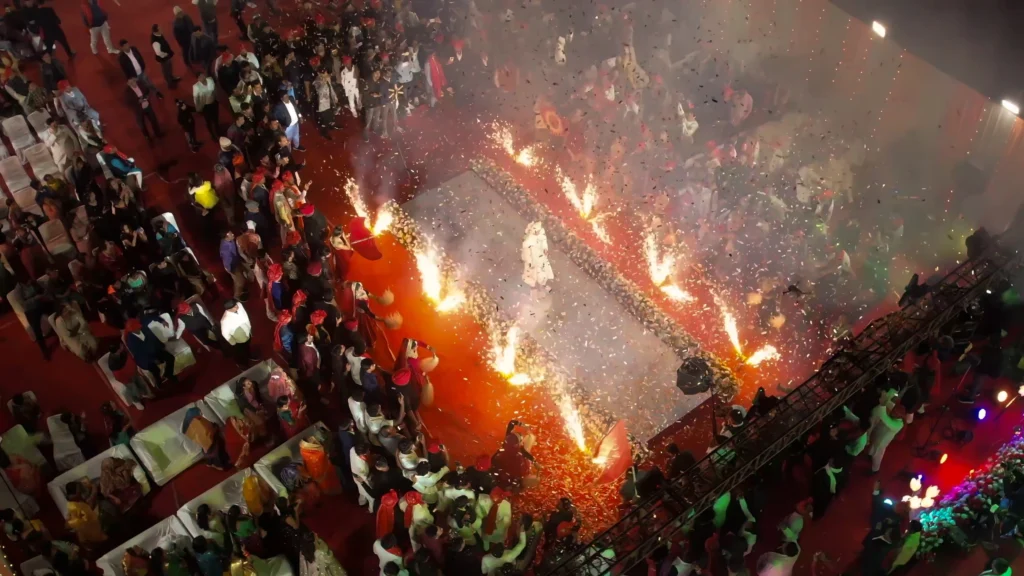
After understanding the venue and event requirements, the next step was coverage planning. The focus was not on taking random drone shots but on deciding where drone usage would be useful and where normal camera coverage would be enough.
During the planning stage, the event flow was analyzed to understand which moments were important, how crowd movement would look, and at what times drone coverage could deliver better results. The coverage plan was created based on these factors.
- Important moments were identified where aerial shots could add value
- Drone and ground camera coverage were planned in balance to avoid repeated shots of the same scenes
- Flying conditions and venue limitations were considered to decide where drone usage would be practical
The overall strategy was simple: instead of using drones everywhere, they were planned only for moments where they could create a noticeable difference in the final output.
● Practical Challenges Faced During Coverage
During the event coverage, several challenges came up because things do not always go exactly according to plan in live events.
Crowd Management During Important Moments
One of the biggest challenges was managing crowd movement. During entry sequences, stage activities, and group moments, people continuously moved around, making it difficult to capture clean aerial frames.
Managing Important Moments Within Limited Time
Many important moments during the event happened only once. Entry sequences, stage activities, performances, and other key moments required proper timing because live events offer very limited opportunities for retakes.
Changing Lighting Conditions
Lighting conditions changed throughout different phases of the event. Daylight, evening lighting, stage lights, and indoor-to-outdoor transitions affected how certain shots needed to be planned and executed.
Venue Limitations and Flying Restrictions
The venue itself created certain limitations. Trees, electric wires, temporary structures, decorations, and limited open spaces made some aerial angles impractical. Coverage had to be adjusted according to the available flying space.
Battery Management and Coverage Timing
Managing battery life and flight timing was also important because drone flight duration is limited. Instead of using the drone continuously, coverage was planned around moments where aerial footage could provide the most value.
● Which Drone Shots Were Most Valuable in the Final Output?
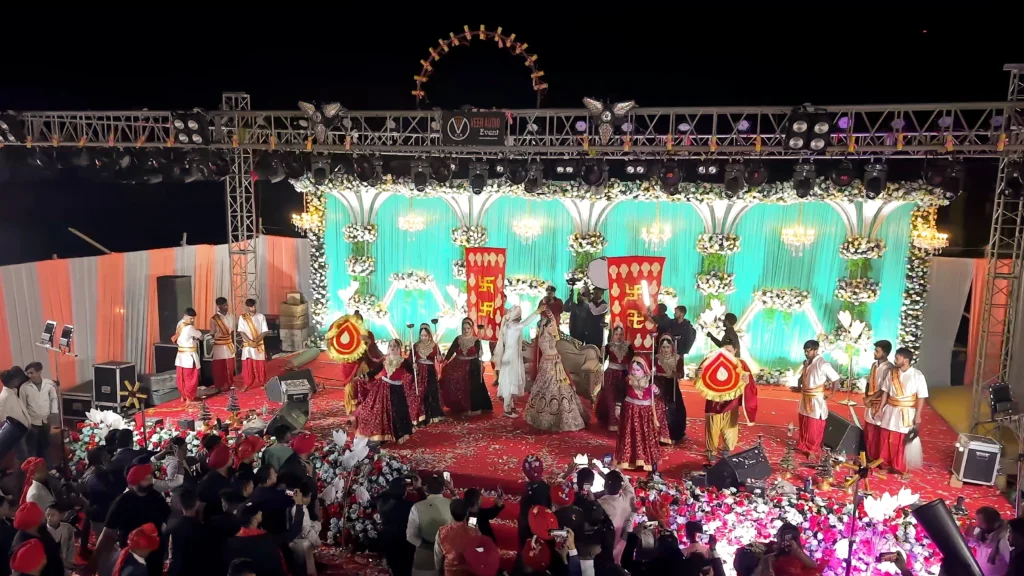
After completing the coverage and reviewing the final footage, it became clear that not every drone shot carried the same importance. Some specific shots made a bigger difference in making the final output feel more complete and visually appealing.
Venue Overview Shots
These shots helped showcase the event location, decorations, and overall setup in a single frame, giving viewers a complete visual overview.
Entry Moments
Wide-angle shots during entries captured the scale, energy, and atmosphere of the moment more effectively.
Crowd and Environment Shots
Instead of focusing only on the main subjects, showing the overall event environment made the final video feel more natural and immersive.
Transition Shots
Aerial movement shots were especially useful during editing, helping connect different scenes smoothly.
One important observation became clear during the review process: the impact of drone coverage does not come only from high-altitude shots. In many cases, simple, properly timed wide shots added the most value to the final output.
● Client Feedback and Overall Coverage
After the final delivery, the focus was not only on how much drone footage was used but also on whether the final output matched the client’s requirements.
Ultimately, we were able to meet the client’s expectations, and they were happy after reviewing the final photos and footage. The overall goal was to deliver coverage that aligned with their requirements and captured the event effectively.
● Ready to Plan Your Event Coverage?
Every event is different, which is why coverage should be planned according to the event requirements, venue, and important moments. If you are planning drone photography or event coverage, having a proper discussion before finalizing the booking can be helpful.
Discuss your coverage requirements, ask questions, and understand what will work best for your event.
📞 Call / WhatsApp:
+91 8235109707
+91 7992406637
Connect today and plan your event coverage more effectively.